
-
Firing a Cannon from a Canoe
 [Read More]: Firing a Cannon from a Canoe
“You can’t fire a cannon from a canoe.” I originally came across this phrase in a strength training context. While martial arts and strength training sometimes don’t mesh nicely, they are both still physical skills and share some common principles. I found this little pearl of wisdom to apply equally well in both contexts. It…
-
Fork Energy: Engaging Structure and Mass
 [Read More]: Fork Energy: Engaging Structure and Mass
At the point of contact, you want to be able to generate at least two energies: one attacking the structure and one attacking the mass. The why and how of this may not be immediately obvious, but the principle behind this “fork” energy can be understood via simple models. As a first pass to understanding,…
-
Random Thoughts Dec 2015
[Read More]: Random Thoughts Dec 2015Inching towards clarity Sifu has said that he doesn’t teach anything new, rather we just understand things differently each time. I haven’t had any earth-shattering learning experiences with my training lately, so I take this to mean that enough of what Sifu has taught me has sunken in that my head no longer hurts when…
-
Tuning In
 [Read More]: Tuning In
“Son of man, you live in the midst of the rebellious house, who have eyes to see but do not see, ears to hear but do not hear; for they are a rebellious house.” ~Ezekiel 12:2 (New American Standard Bible) A good portion of learning I-Liq Chuan is learning to recognize what you are seeing.…
-
Training Mistakes
 [Read More]: Training Mistakes
Mistakes are part of the training process. Stumbling a bit while exploring beyond your comfort zone is par for the course. Recognizing the mistakes and correcting them is essential to make progress. I didn’t see my mistakes at the time (hindsight is 20/20). Looking back on my training, I’ve made plenty of mistakes that were…
-
What a Child Can Teach You About Learning Gong Fu
[Read More]: What a Child Can Teach You About Learning Gong FuBabies start their lives with very limited movement abilities, and yet they can learn to crawl and walk largely on their own. They focus their attention on themselves to wire up the neural pathways that allow them control their bodies and feel what their bodies can sense. Learning gong fu as an adult requires a…
-
Why I-Liq Chuan?
 [Read More]: Why I-Liq Chuan?
I haven’t given the question much thought in a while since I had already long since decided to focus on ILC. But now that I teach as well as study the art, it is a question I have to answer with some regularity. After I was recently asked about the specific distinguishing characteristics of ILC, I…
-
Squats, Hip Rhythm, and Projecting
 [Read More]: Squats, Hip Rhythm, and Projecting
One of the things that I find painful to observe when I go to the gym is watching people do squats. It’s a basic movement that gets butchered since our sedentary lifestyles have made us forget how to move from the hips. Instead, what happens when people squat is mostly poorly coordinated movements starting from…
-
Skill is not automatic
 [Read More]: Skill is not automatic
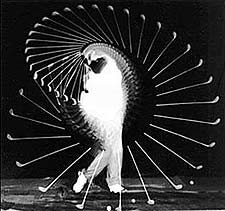
Achieving proficiency in a martial art requires certain abilities. However, the abilities themselves do not equate to high level proficiency. To achieve mastery of an art requires developing skill. Skill and ability are related concepts, but are distinct. The difference between the two is subtle, and I have not always had the best explanation to distinguish…
-
Physics of Fajin, Pt. 2
 [Read More]: Physics of Fajin, Pt. 2
You don’t have to be a rocket scientist to figure out fajin, but you might want to use a little rocket math to understand it. The force equation is a fundamental relationship for understanding how rockets get off the ground. In the last blog post, we left off mentioning how we need acceleration to generate enough…